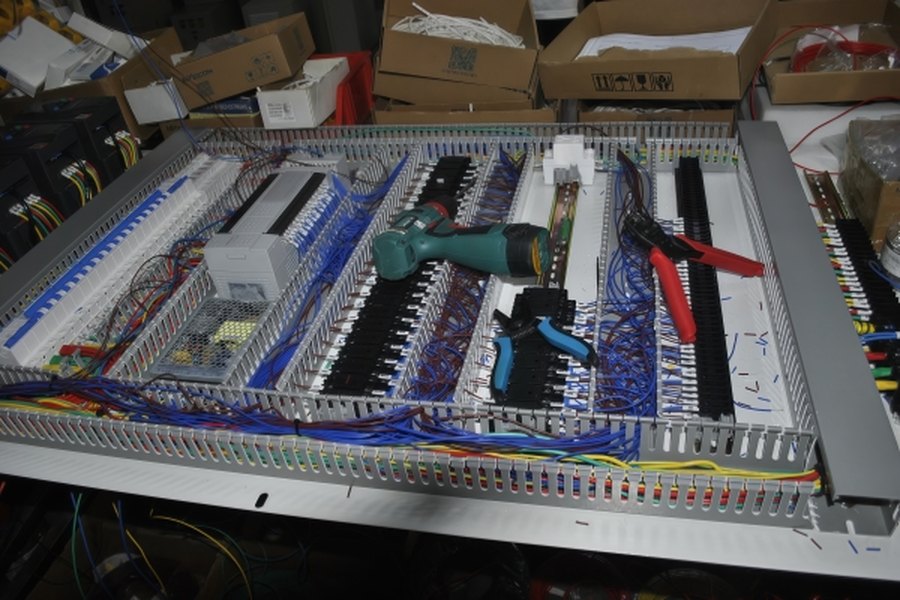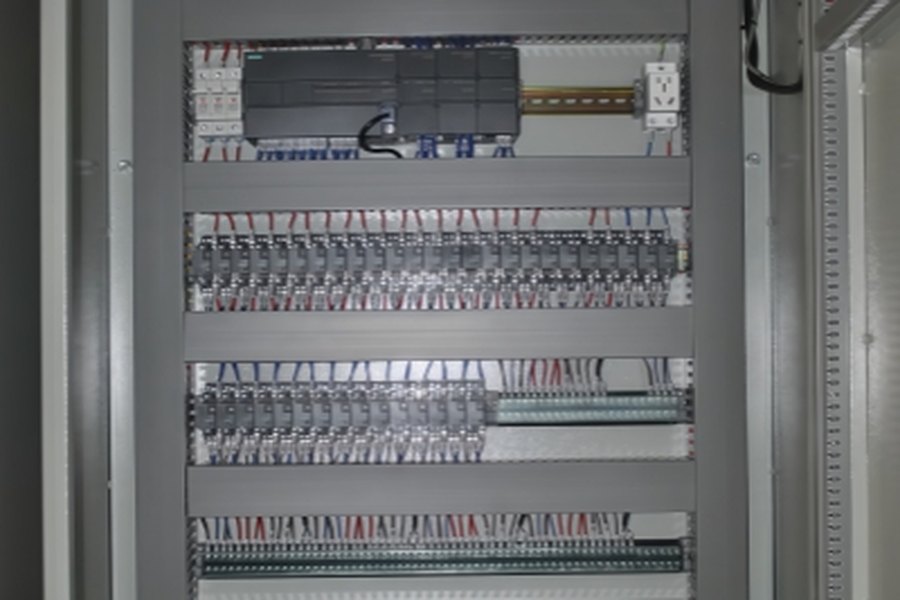
Panel building is a detail business. The difference between a cabinet that runs for fifteen years and one that is opened every month is rarely the drive or the breaker — it is whether the wire was ferruled, whether the shield was landed, whether the terminal was torqued.
We keep the scope narrow on purpose: low-voltage control and distribution cabinets, built to the customer's document, assembled and tested by the people who will answer the phone if something needs explaining.
01 Build what the drawing says. The customer's diagram is the reference. Where we think a detail could be improved — a terminal number, a clearance, a cable route — we raise it before the panel is wired, not after.
02 Label everything. If a panel cannot be maintained, it will be replaced early. Ferrules, wire numbers, terminal markers and a door pocket drawing are part of the build, not an extra.
03 Test before you promise. Continuity, insulation resistance and a powered function test. Delivery dates only matter if the panel works when it arrives.
04 Keep the record. Component lists, wiring schedules and photographs are kept against the order number, so a repeat batch in eighteen months matches the first one.